Mysticism to Mindfulness: Introduction to Beverage-Based Ceremonies Around the World
Hello! My name is Sam, and I’m one of the matcha maniacs at the Tokyo Matcha Academy. If you’re interested in kimono (着物), Japanese traditional culture, and tea, I’ve got you covered! Join us bi-weekly as we explore themes around teaism and sadō (茶道) culture.
Introduction
Ceremony (cer·e·mo·ny), a noun, is defined by the Merriam-Webster Dictionary as “a formal act or series of acts prescribed by ritual, protocol, or convention”. It can also refer to a conventional act of politeness or etiquette, or a prescribed procedure associated with a particular occasion.
When discussing tea ceremonies, coffee ceremonies, and cacao ceremonies, the meaning of the word ceremony shifts depending on the cultural context. Yet at the heart of each practice lies a common thread: the intentional preparation and sharing of a beverage as a means of fostering connection, mindfulness, and community. In this article, we’ll explore how these traditions, while distinct in origin and purpose, reveal a shared human desire to connect with one another through ritual.
Ethiopian Coffee Ceremony
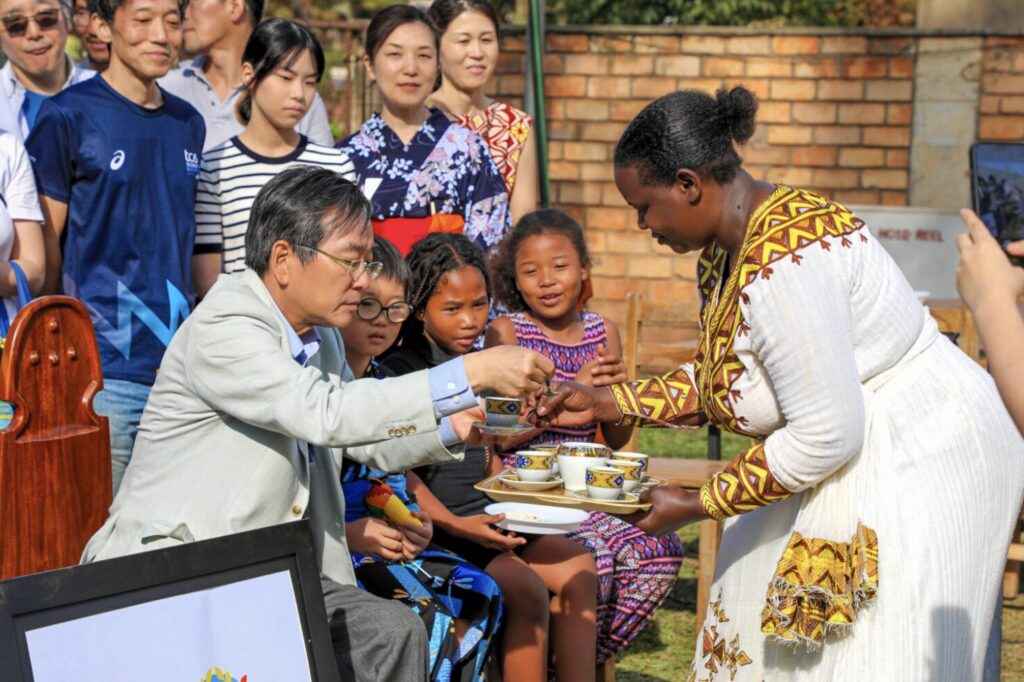
In February 2025, Ethiopia submitted the Ethiopian Coffee Ceremony for inclusion on UNESCO’s Intangible Cultural Heritage list. The coffee ceremony is deeply ingrained in Ethiopian society, with women serving as the primary practitioners in many communities. Whether performed daily or reserved for special occasions, the ceremony emphasizes hospitality, respect, and the strengthening of social bonds through the preparation and sharing of coffee.
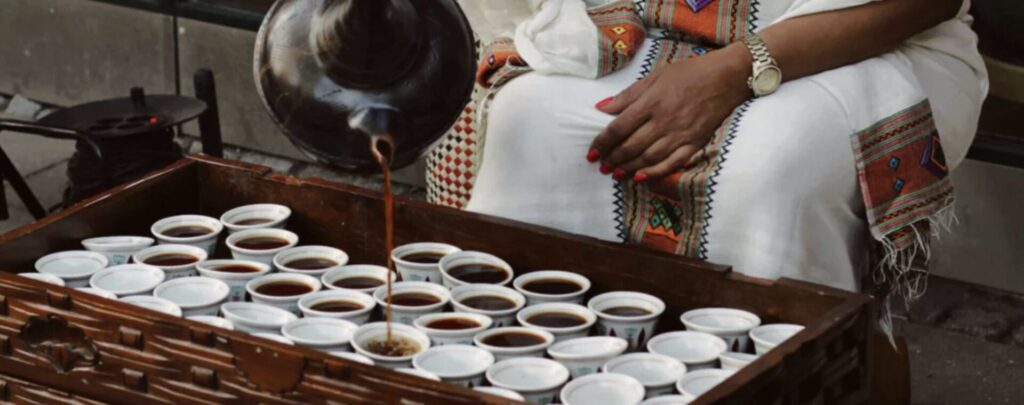
The ceremony begins by roasting green coffee beans in front of guests, allowing the rich aroma to invite everyone into the gathering. The freshly roasted beans are then ground using a mortar and pestle before being brewed in a traditional clay coffee pot known as a jebena. Once prepared, the coffee is poured in a continuous stream into small, handleless cups called sini.
The coffee is traditionally served in three rounds, each carrying its own symbolic meaning.
The first round, Abol, is the strongest brew and marks the beginning of the ceremony. It symbolizes the opening of the mind and body while welcoming meaningful conversation.
The second round, Tona, produces a slightly milder brew, and represents the strengthening of relationships and the continuation of dialogue among participants.
The final round, Baraka, often called the “blessing cup,” symbolizes gratitude, goodwill, and spiritual well-being. Completing all three rounds reflects the mutual respect between host and guests.
According to Ethiopian folklore, the origins of coffee trace back to a goat herder who noticed his goats becoming unusually energetic after eating bright red berries from a nearby shrub. Curious, he tried the berries himself and experienced the same burst of energy. When he shared his discovery with local monks, they began cultivating the plant so they could remain awake during long nights of prayer. While coffee may have first been valued for its stimulating effects, the ritual of roasting and sharing it gradually evolved into an important social tradition; centered on storytelling, conversation, and community.
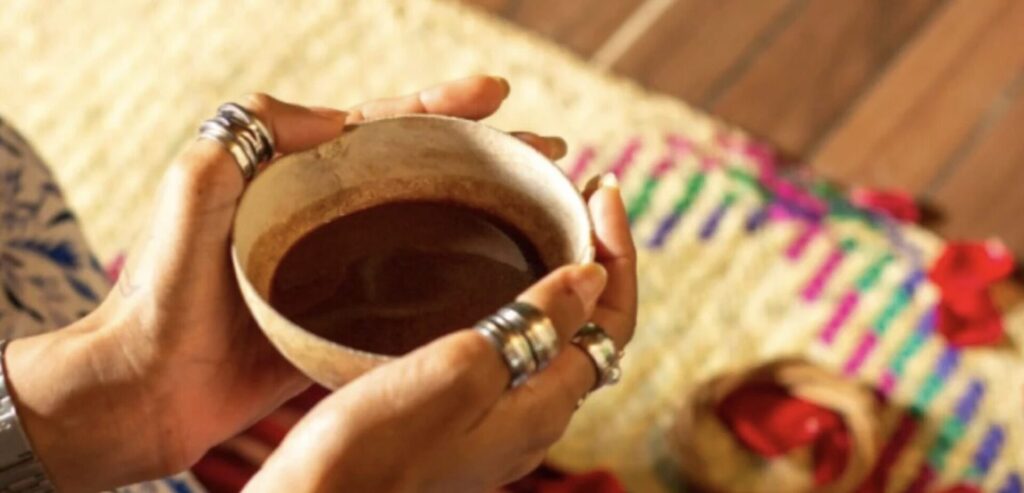
Mesoamerican Cacao Ceremony
Cacao ceremonies have been practiced in Mesoamerica for thousands of years. Often referred to as the “Food of the Gods,” cacao served not only as nourishment but also as currency, medicine, and a sacred bridge between the physical and spiritual worlds. Although much of the ceremonial practices of the Olmec civilization remain unknown due to limited historical records, later civilizations such as the Maya and Aztec inherited the belief that cacao possessed divine significance.
For the Maya, cacao played an important role in weddings, religious ceremonies, and funerals. It was even placed in tombs to assist the deceased on their journey into the afterlife. Their ceremonial beverage was typically prepared by mixing cacao with water, chili, and maize before repeatedly pouring it between two vessels. This process created a rich foam, which was considered the most sacred and prized part of the drink.
Among the Aztecs, cacao was associated with power, vitality, and status. Warriors, priests, and nobles consumed the beverage because it symbolized strength, focus, life force, and blood. Their preparation often combined cacao with chili and vanilla and was traditionally served cold.
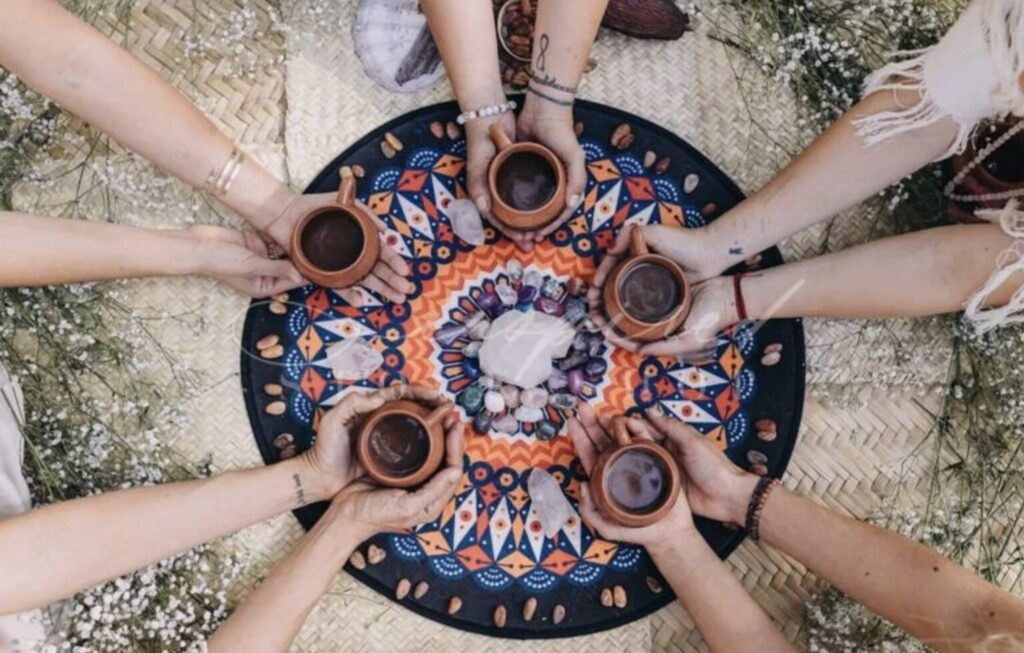
Modern cacao ceremonies have evolved considerably from these ancient traditions. Today, they are commonly centered on mindfulness, emotional healing, and self-reflection. Participants drink minimally processed ceremonial-grade cacao while engaging in meditation, chanting, drumming, breathwork, or guided introspection. Although contemporary practices differ across communities, they generally emphasize presence, gratitude, and deeper human connection.
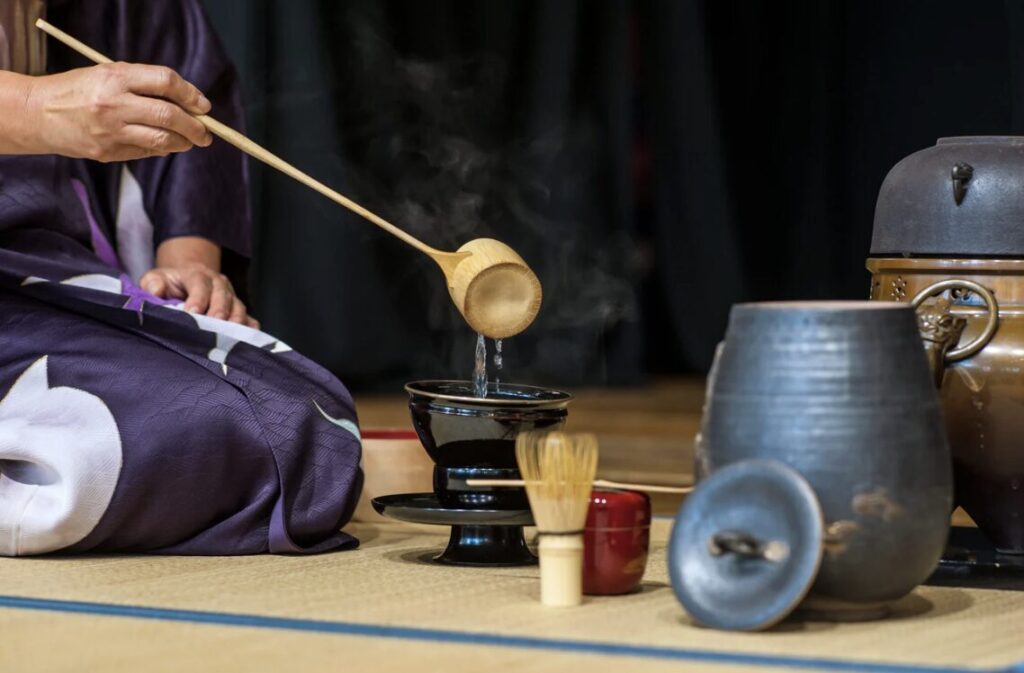
Japanese Tea Ceremony
The origins of tea in Japan date back to the 8th century, when tea was first introduced from China. However, it was not until the 12th century that the Zen Buddhist monk Eisai (栄西) promoted the health benefits of powdered green tea and encouraged its cultivation in Japan. Tea soon became closely associated with Zen Buddhist meditation, helping practitioners cultivate concentration and mindfulness.
In the 15th century, Murata Jukō (村田珠光) developed wabi-cha (侘茶 or 侘び茶), laying the philosophical foundation for what would become the Japanese tea ceremony. He emphasized simplicity, humility, quiet introspection, and an appreciation for rustic beauty, encouraging the use of natural, unpretentious utensils and intimate tea spaces.
Later, Sen no Rikyū (千利休) refined these ideas and transformed tea into a highly disciplined cultural art. Often regarded as the father of the modern Japanese tea ceremony, Rikyū emphasized minimalism, harmony with nature, spiritual awareness, and sincere hospitality.
He also established the four guiding principles of tea, which continue to shape tea practice today:
- Wa (和) – Harmony
- Kei (敬) – Respect
- Sei (清) – Purity
- Jaku (寂) – Tranquility
Following the Meiji Restoration, many traditional Japanese arts experienced a period of decline. Fortunately, the tea ceremony endured and eventually regained popularity as a cherished symbol of Japanese cultural identity.
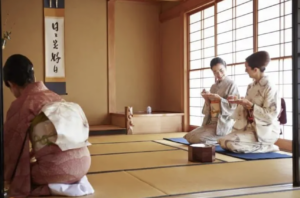
Today, tea ceremonies continue to be practiced throughout Japan as a means of cultivating mindfulness, appreciation, and human connection. Tea schools also welcome visitors from around the world, offering opportunities to experience the traditions of sadō in temples, gardens, and cultural centers.
At Tokyo Matcha Academy, guests can learn not only how to properly whisk matcha but also about the history of Japanese tea culture and tea cultivation. Whether you’re new to matcha or eager to deepen your appreciation for Japanese culture, it’s an experience that brings centuries of tradition to life.
Conclusion
Whether brewed in a jebena, poured into a ceremonial cacao cup, or whisked into a bowl of matcha, each beverage has long been more than a simple refreshment. Across cultures and centuries, they have served as vessels for hospitality, spiritual practice, reflection, and human connection.
Although Ethiopian coffee ceremonies, Mesoamerican cacao ceremonies, and Japanese tea ceremonies developed independently, they all remind us that the act of preparing and sharing a drink can become something far more meaningful when approached with intention. While some of these traditions remain closely tied to their religious or cultural origins, others have evolved into modern practices centered on mindfulness and well-being. Yet the essence remains the same: slowing down, being present, and creating space to connect—with ourselves, with others, and with the moment at hand.
In today’s fast-paced world, these ceremonies offer a gentle reminder that not every cup needs to be consumed on the go. Sometimes, the greatest value lies not in the beverage itself, but in the care taken to prepare it and the conversations shared while enjoying it. Therefore, whether your drink of choice is coffee, cacao, or matcha; the most meaningful ritual is simply taking the time to appreciate it.
You might also like
- Mysticism to Mindfulness: Introduction to Beverage-Based Ceremonies Around the World
- How Tea Ceremony Teaches Mindfulness Through The Senses
- A Beginner’s Guide to the History of Japanese Tea Ceremony
- Zengo in Japanese Tea Ceremony: 5 Important Zen Words Behind the Spirit of Matcha

- 5 Most Important Tea Ceremony Manners Every Beginner Should Know
- First Tea Ceremony in Japan? Try Bringing These Items!