Zengo in Japanese Tea Ceremony: 5 Important Zen Words Behind the Spirit of Matcha
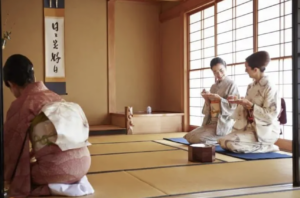
Japanese tea ceremony is often admired for its graceful movements, quiet atmosphere, seasonal sweets, and carefully prepared bowl of matcha.
But tea ceremony, or 茶の湯 / cha no yu, is not only about drinking tea. It is also connected to Zen thought, Japanese aesthetics, mindfulness, and the relationship between host and guest.
One way this deeper meaning appears is through 禅語 / zengo — short Zen phrases often displayed in the tea room.
These phrases are usually written on a hanging scroll called a 掛け軸 / kakejiku. The host may choose a scroll based on the season, the guests, the occasion, or the feeling they want to create for that day’s gathering.
In this article, we will introduce five important zengo connected to Japanese tea ceremony and matcha culture:
- 一期一会 / ichigo ichie
- 喫茶去 / kissako
- 一座建立 / ichiza konryū
- 円相 / ensō
- 日々是好日 / nichi nichi kore kōjitsu
Each phrase gives us a different way to understand the spirit of tea ceremony.
What Is Zengo?
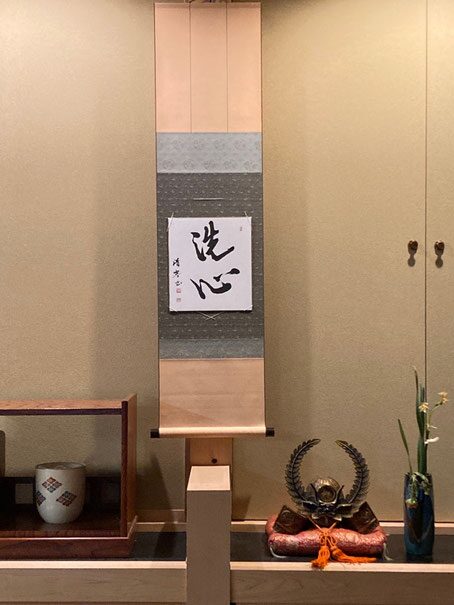
Zengo means “Zen words” or “Zen phrases.”
In Japanese tea ceremony, zengo often appears on the scroll displayed in the tea room’s alcove, or 床の間 / tokonoma. Before the tea is served, guests may take a moment to appreciate the scroll.
The scroll is not simply decoration. It helps set the tone of the gathering.
It may quietly invite guests to think about the season, the present moment, the relationship between host and guest, or the deeper meaning of sharing tea together.
Even a short Zen phrase can express a whole way of seeing life.
That is why zengo is such an important part of tea ceremony. It helps us understand that tea ceremony is not only about correct manners or beautiful objects. It is also about presence, respect, gratitude, and awareness.
1. 一期一会 / Ichigo Ichie
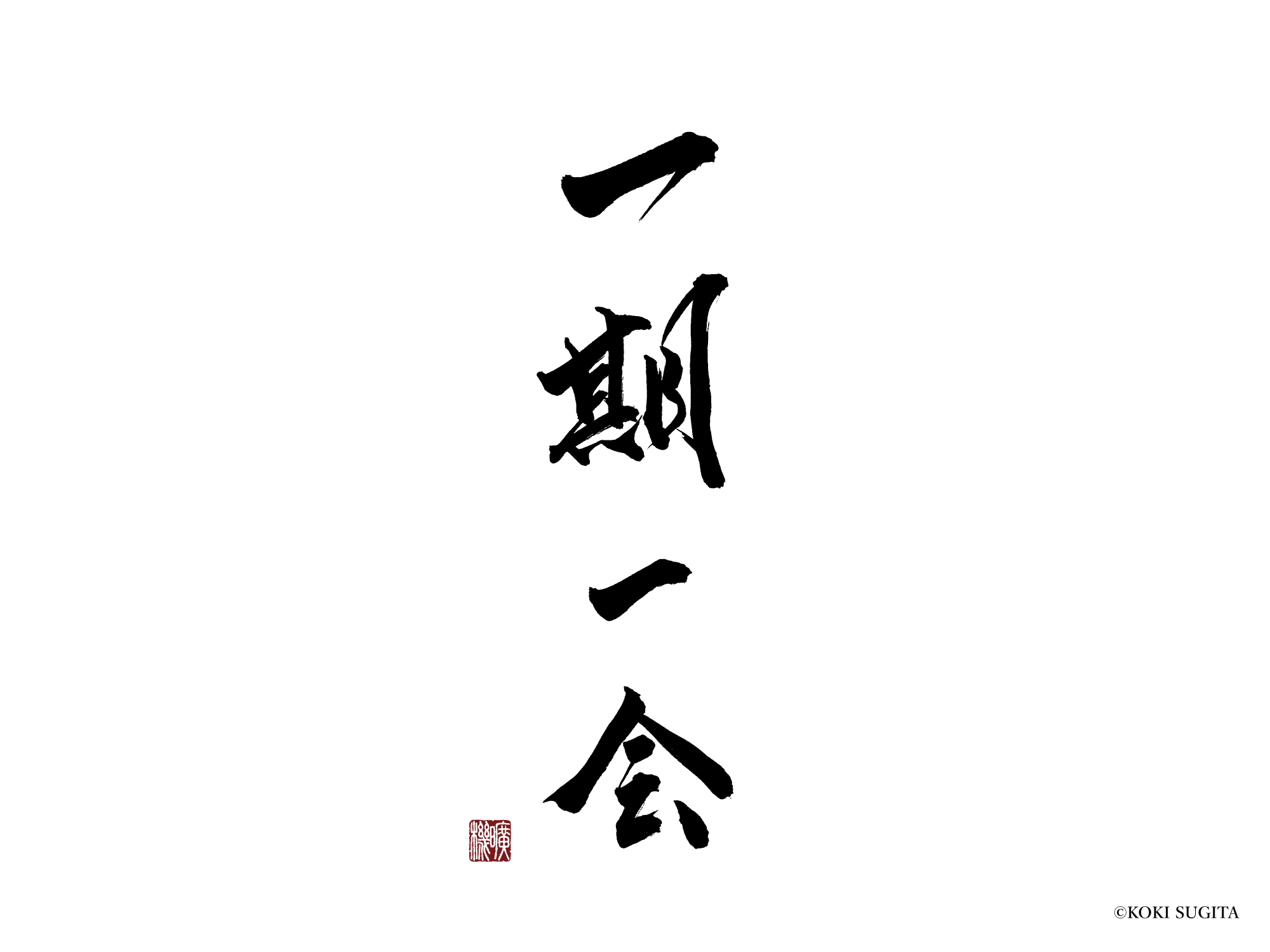
一期一会 / ichigo ichie is one of the most meaningful and widely loved Japanese phrases connected to tea ceremony.
It is often translated as:
“One time, one meeting.”
This simple phrase carries a powerful message: every encounter is unique, precious, and impossible to repeat.
Even if the same people gather again in the same room, the moment itself will never be exactly the same. The season may have changed. The weather may feel different. The guests may arrive with different emotions. The host may choose different utensils, sweets, flowers, or a different tea bowl.
In Japanese tea ceremony, ichigo ichie reminds both the host and guests to treat each gathering with deep care and sincere attention.
The host prepares every detail thoughtfully, considering the guests, the season, the tea bowl, the sweets, and the atmosphere. The guests, in return, receive the tea with respect, awareness, and gratitude.
A bowl of matcha may seem simple at first, but in tea ceremony, it becomes something unforgettable: a once-in-a-lifetime moment shared between people, nature, objects, and time.
That is the quiet power and lasting beauty of ichigo ichie.
2. 喫茶去 / Kissako
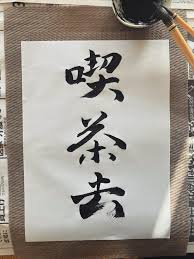
喫茶去 / kissako is a well-known Zen phrase often connected with tea.
It can be translated as:
“Have some tea.”
At first, this phrase may sound almost too simple. But that simplicity is exactly what makes it meaningful.
Kissako invites us to stop overthinking and simply be present.
In tea ceremony, beginners sometimes worry about doing everything correctly.
Am I bowing the right way?
Am I holding the tea bowl correctly?
What should I say?
What if I make a mistake?
Manners are important because they show respect. But the heart of tea ceremony is not perfection. The heart is presence.
Kissako reminds us to receive the tea in front of us.
Feel the warmth of the bowl.
Notice the color of the matcha.
Listen to the quiet.
Take a breath.
Drink the tea.
In a busy world, “Have some tea” can be a surprisingly deep invitation.
3. 一座建立 / Ichiza Konryū
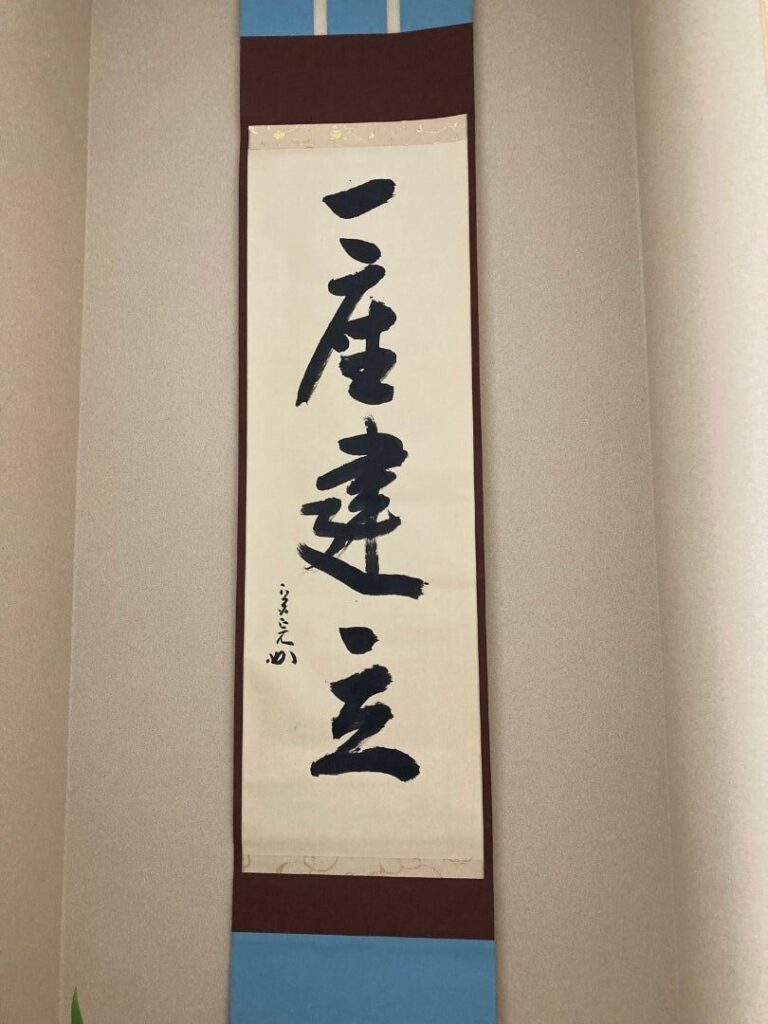
一座建立 / ichiza konryū is a beautiful phrase that describes the relationship between host and guests.
It can be understood as:
“Creating one shared gathering together.”
In tea ceremony, the host prepares the room, chooses the utensils, makes the tea, and welcomes the guests. But the host does not create the atmosphere alone.
The guests also play an important role.
Their attention, respect, gratitude, and presence help complete the gathering.
Tea ceremony is not simply a performance where one person acts and everyone else watches. It is a shared experience created by everyone in the room.
This is the meaning of ichiza konryū.
A thoughtful bow becomes part of the ceremony.
A quiet pause becomes part of the ceremony.
A word of thanks becomes part of the ceremony.
The way a guest receives the bowl becomes part of the ceremony.
This is one reason why tea ceremony feels different from simply ordering matcha at a café.
In a café, tea is often a product.
In tea ceremony, tea becomes a shared moment.
4. 円相 / Ensō
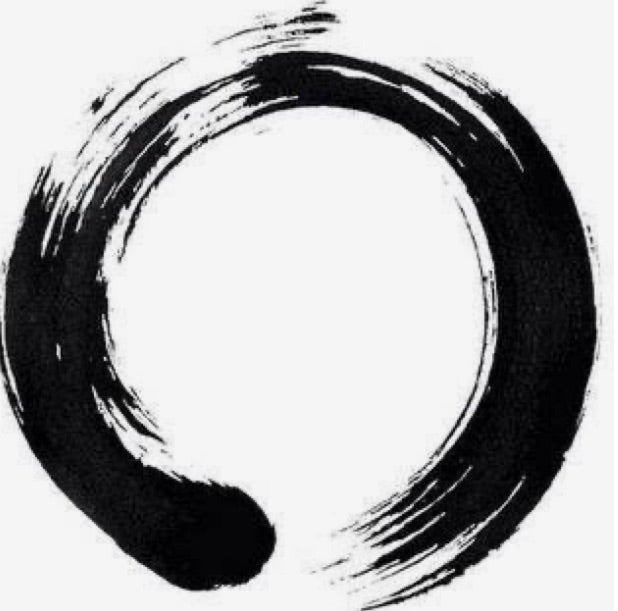
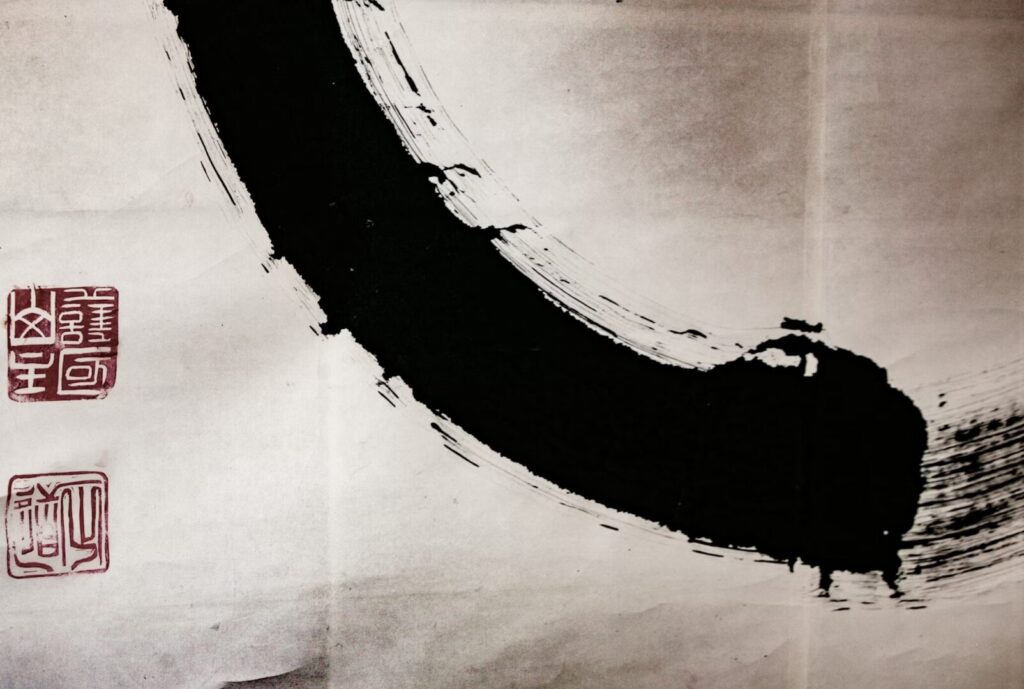
円相 / ensō is the Zen circle often seen in Japanese calligraphy.
It is usually drawn with one brushstroke. The circle may be open or closed, smooth or uneven, bold or delicate.
Ensō can represent many things, including emptiness, completeness, harmony, enlightenment, simplicity, and the beauty of imperfection.
In tea ceremony, ensō connects naturally with the quiet beauty of the tea room.
A tea room is often simple and minimal. The movements are controlled but not flashy. The utensils may be handmade, rustic, or imperfect in shape.
The beauty is not in luxury or excess. It is in balance.
A hand-drawn circle is never mechanically perfect. The brush may be darker in one place and lighter in another. The line may be uneven. But that is what makes it alive.
This connects with the Japanese aesthetic of wabi-sabi — finding beauty in simplicity, imperfection, and change.
Just like a handmade tea bowl, ensō reminds us that beauty does not have to be flawless.
One bowl of tea is enough.
One quiet moment is enough.
One meeting is enough.
5. 日々是好日 / Nichi Nichi Kore Kōjitsu
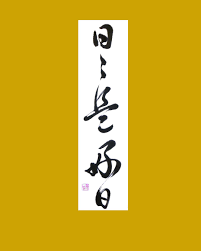
日々是好日 / nichi nichi kore kōjitsu is another beloved Zen phrase often associated with tea, mindfulness, and daily life.
It is commonly translated as:
“Every day is a good day.”
At first, this may sound like a simple positive phrase. But its meaning is deeper.
It does not mean that every day is easy, happy, or free from trouble. Rather, it suggests that each day has its own value.
Some days are joyful.
Some days are tiring.
Some days are ordinary.
Some days do not go as planned.
Tea ceremony teaches us to meet each moment fully, instead of wishing it were different.
The weather may be rainy.
The tea bowl may be simple.
The gathering may be small.
Still, the moment has meaning.
In tea ceremony, nichi nichi kore kōjitsu can mean appreciating the day exactly as it is: the season, the room, the guests, the wagashi, the utensils, and the bowl of matcha in front of you.
This phrase reminds us to find richness in the present day, not only in perfect or special occasions.
Why Zengo Matters in Japanese Tea Ceremony
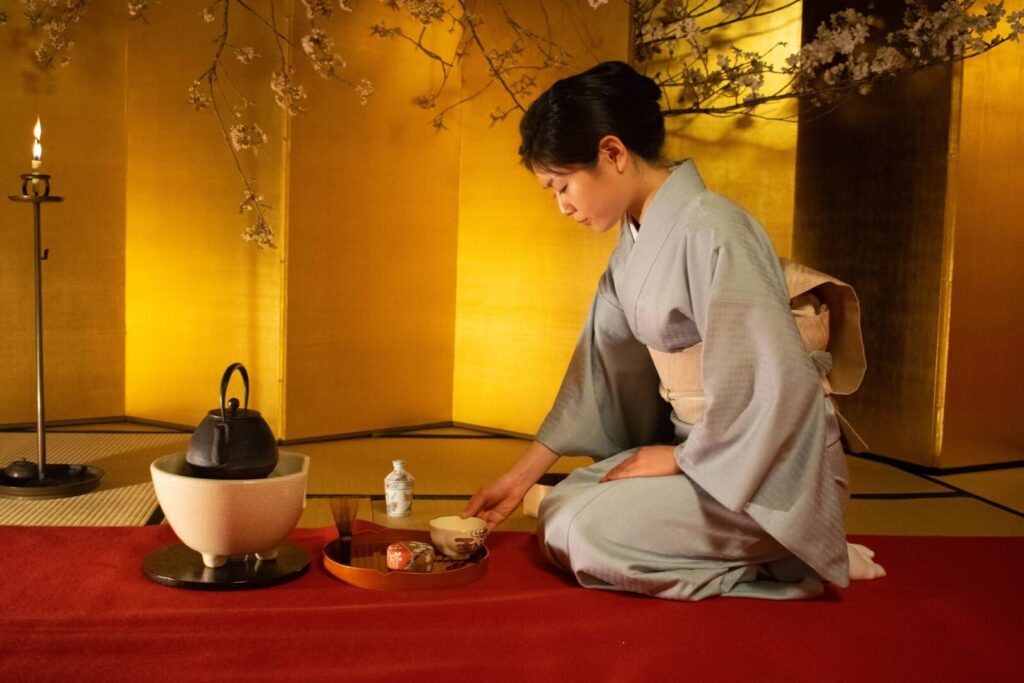
Zengo helps us understand that Japanese tea ceremony is not only about rules.
There are many detailed manners in tea ceremony: how to bow, how to receive the tea bowl, how to drink matcha, how to appreciate the utensils, and how to thank the host.
But behind these actions is a deeper spirit.
Ichigo ichie teaches us to treasure each meeting.
Kissako teaches us to be present.
Ichiza konryū teaches us that host and guests create the gathering together.
Ensō teaches us simplicity, harmony, and the beauty of imperfection.
Nichi nichi kore kōjitsu teaches us to appreciate each day as it comes.
These ideas make tea ceremony feel less intimidating.
You do not need to understand every rule perfectly to appreciate the experience. You can begin by understanding the feeling behind the ceremony: respect, presence, gratitude, and connection.
Conclusion: Experiencing Zengo Through Matcha
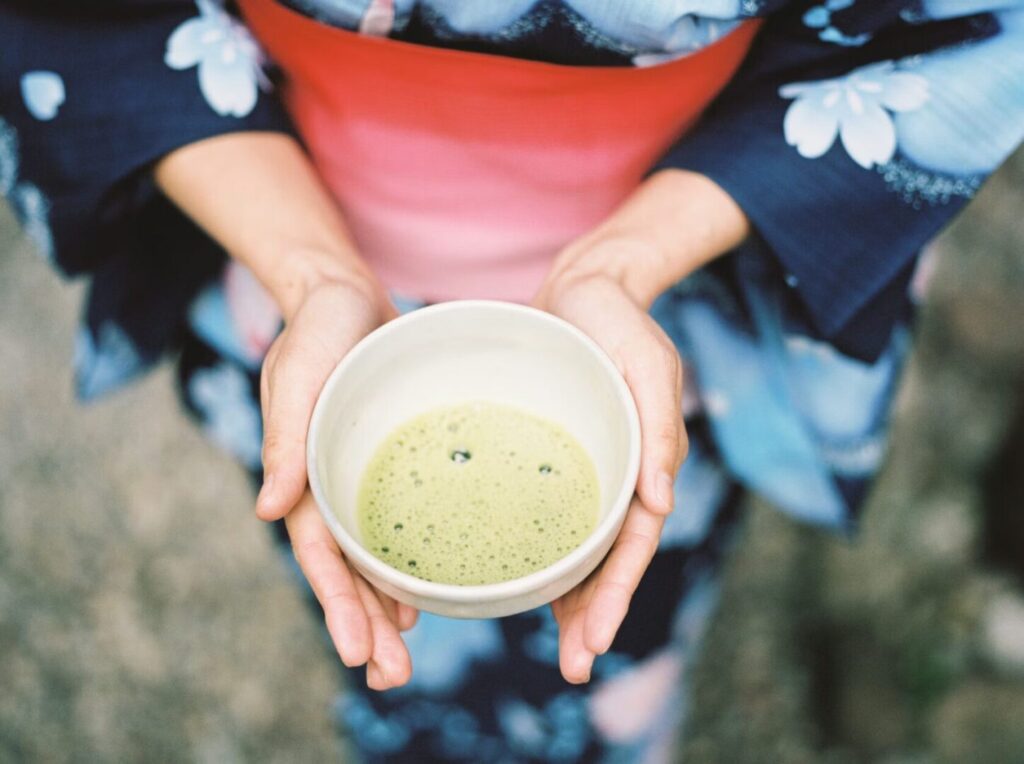
The best way to understand zengo is not only by reading about it. It is by experiencing it.
When you sit in a tea room, receive a bowl of matcha, and take a quiet moment away from daily life, these ideas become easier to feel.
You may notice the seasonal sweet.
You may feel the warmth of the tea bowl in your hands.
You may hear the sound of the bamboo whisk.
You may realize that this exact moment will never happen again.
That is ichigo ichie.
You may stop worrying about doing everything perfectly and simply enjoy the tea.
That is kissako.
You may feel that the host, guests, room, utensils, and tea are all part of one shared atmosphere.
That is ichiza konryū.
You may notice beauty in quietness, simplicity, and imperfection.
That is ensō.
And you may find yourself appreciating the day exactly as it is, through one simple bowl of tea.
That is nichi nichi kore kōjitsu.
Zengo gives us a doorway into the deeper world of Japanese tea ceremony.
These short Zen phrases may look simple, but they carry centuries of thought, culture, and practice. They remind us that tea ceremony is not only about matcha. It is about how we meet others, how we notice the present moment, and how we find beauty in simplicity.
At Tokyo Matcha Academy, we hope guests can experience not only the taste of matcha, but also the spirit behind it.
A single bowl of tea can become a quiet lesson in Japanese culture, mindfulness, and connection.
And perhaps that is the true beauty of tea ceremony:
one bowl,
one moment,
one meeting —
and one good day.
Take Part In Our Matcha & Kimono Cultural Experience
If you’re interested in experiencing a deeper side of Japanese culture during your visit, come visit our cultural experience called Tokyo Matcha Academy.
At Tokyo Matcha Academy guests can dress in kimono and learn how to prepare authentic Japanese matcha while exploring the traditions behind Japanese tea culture. We guide visitors through the basics of whisking matcha and explain the history and meaning behind the tea ritual.
It’s designed to be a relaxed, hands-on experience where travelers can slow down and enjoy a quieter side of Japan while sipping freshly prepared matcha.
Wearing kimono also makes it a wonderful opportunity for photos and a chance to experience traditional Japanese aesthetics in a meaningful way.
If you’re looking for a cultural activity beyond sightseeing, this can be a special way to connect with Japanese tea traditions and hospitality.
Interested in joining one of our workshops? Make a booking on our site at
https://matchajaponica.com
We look forward to seeing you during your trip to Tokyo!
You might also like
- Mysticism to Mindfulness: Introduction to Beverage-Based Ceremonies Around the World
- How Tea Ceremony Teaches Mindfulness Through The Senses
- A Beginner’s Guide to the History of Japanese Tea Ceremony
- Zengo in Japanese Tea Ceremony: 5 Important Zen Words Behind the Spirit of Matcha

- 5 Most Important Tea Ceremony Manners Every Beginner Should Know
- First Tea Ceremony in Japan? Try Bringing These Items!