A Beginner’s Guide to the History of Japanese Tea Ceremony
Hello! My name is Sam and I am one of the matcha maniacs working at the Tokyo Matcha Academy. If you are interested in kimono, Japanese traditional culture, and tea; I’ve got you covered! Join us bi-weekly, as we explore teaism and sado!
The Japanese tea ceremony is one of the most recognizable and respected traditions in Japan. Known as chanoyu (茶の湯), sado (茶道), or chado (茶道), the ceremony is far more than simply preparing and drinking tea. It is a cultural practice rooted in mindfulness, hospitality, spirituality, and aesthetics.
Over hundreds of years, the modern tea ceremony has evolved from Chinese tea customs into a Japanese art; shaped by Zen Buddhism, samurai culture, and the philosophy of simplicity. Today, it remains an important symbol of Japanese culture and continues to attract visitors and practitioners from around the world.
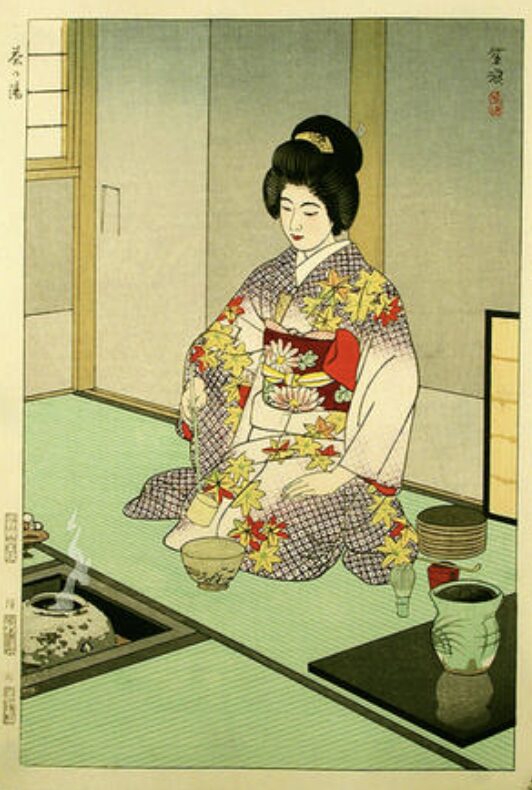
What Is the Japanese Tea Ceremony?
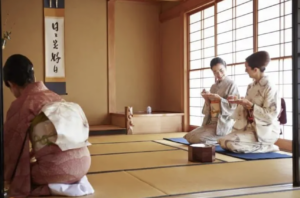
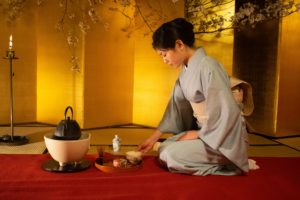
The Japanese tea ceremony is a ritualized method of preparing and serving powdered green tea, also known as matcha. Every movement in the ceremony is intentional, from cleaning the utensils to whisking the tea.
The practice emphasizes:
- Wa (和 Harmony)
- Kei (敬 Respect)
- Sei (清 Purity)
- Jaku (寂 Tranquility)
These principles are intended to guide both the host and guests throughout the experience.
Tea ceremonies are typically held in specially designed tea rooms or tea houses, where guests can appreciate seasonal decorations, handmade ceramics, flower arrangements, and a quiet atmosphere.
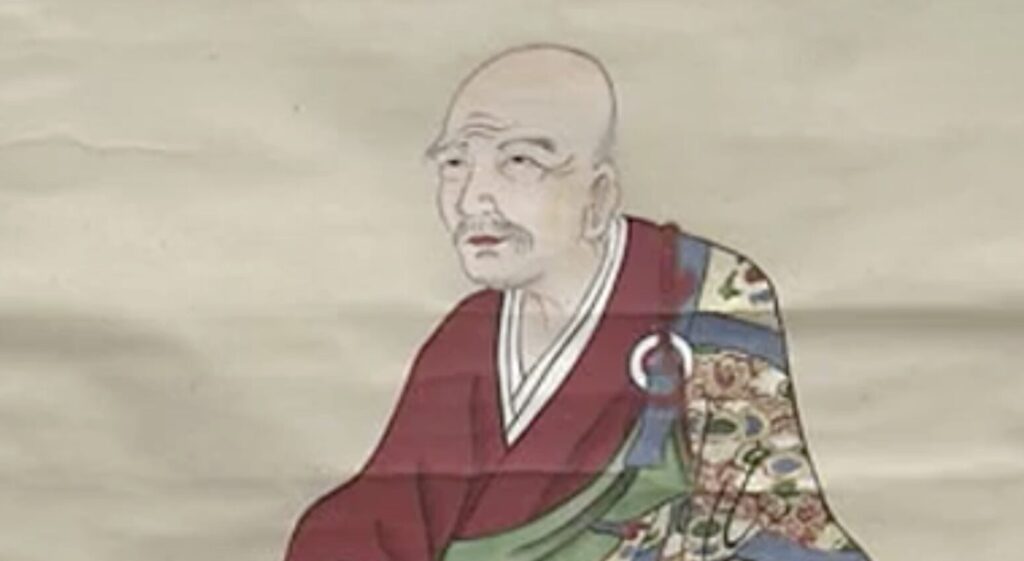
Origins of Tea in Japan
Tea first arrived in Japan from China during the 8th and 9th centuries. Buddhist monks traveling to Tang Dynasty China brought tea seeds and tea-drinking customs back with them.
However, tea became more influential in the 12th century through the efforts of Eisai (栄西), a Zen Buddhist monk who introduced powdered green tea and promoted its health benefits. Eisai wrote a book called Kissa Yojoki (喫茶養生記, Drinking Tea for Health), which helped popularize tea among monks and the aristocracy.
At first, tea drinking was largely limited to Buddhist temples, noble families and elite social circles. Zen monks in particular valued tea because it helped maintain alertness during meditation.
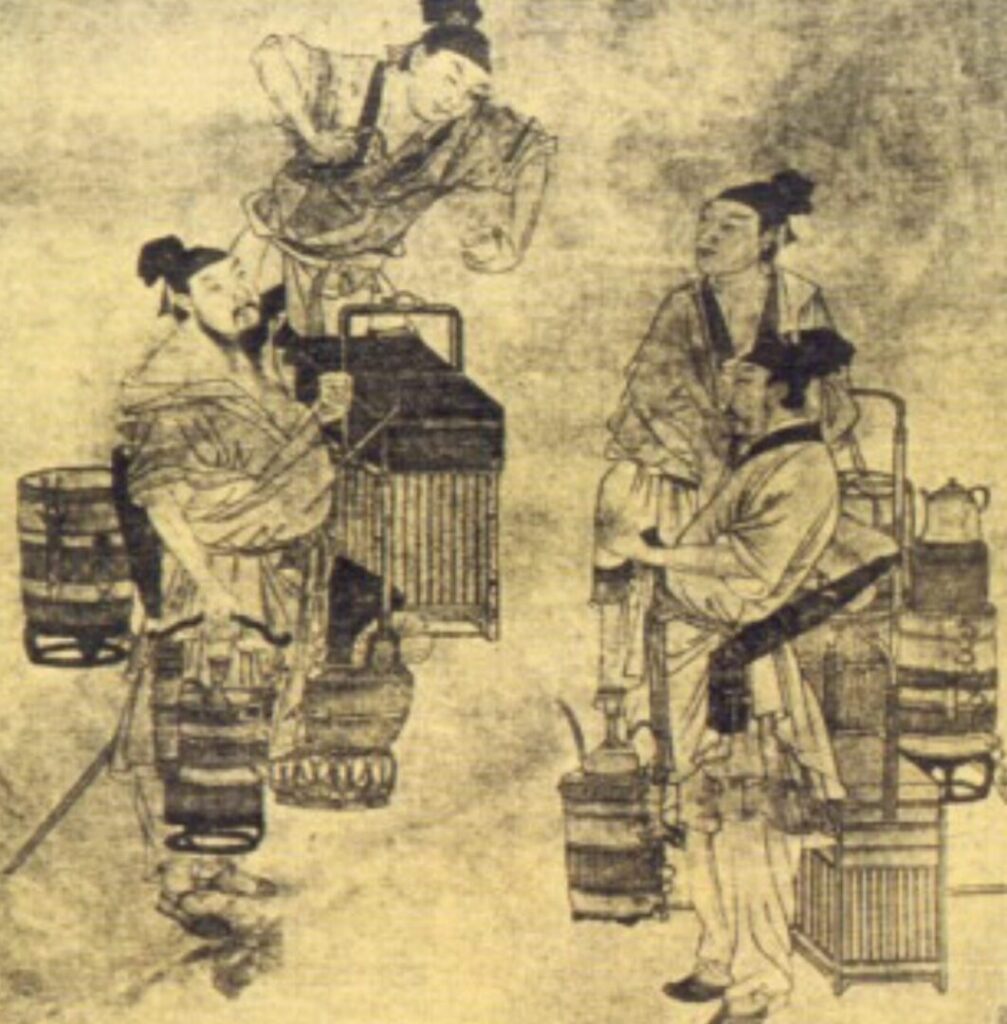
Tea Culture During the Samurai Era
During the Kamakura and Muromachi periods, tea culture spread among the samurai class. Wealthy warriors and nobles hosted elaborate tea gatherings where guests admired expensive imported Chinese goods.
One popular activity was tocha (闘茶), a tea-tasting game in which participants guessed the origins of different teas. These gatherings were often luxurious and competitive.
Over time, some tea masters began moving away from extravagance and back toward simplicity and spiritual reflection.
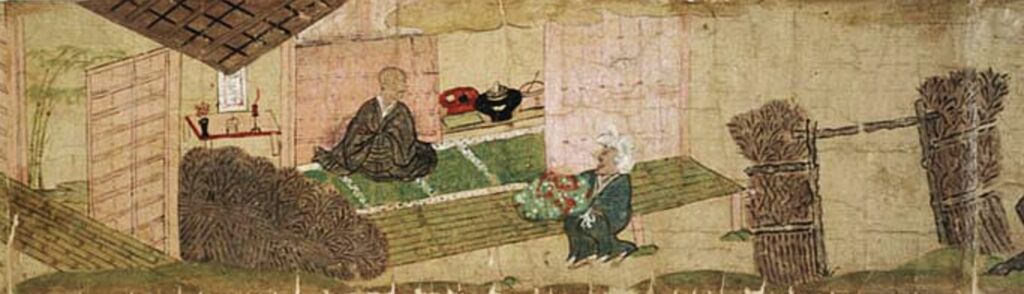
The Development of Wabi Tea
A major turning point in the history of the Japanese tea ceremony came with Murata Juko (村田珠光) in the 15th century.
Murata Juko introduced the concept of wabi (侘び), an aesthetic centered on simplicity, humility, and understated beauty. Rather than valuing expensive imported objects, he encouraged appreciation for rustic utensils and quiet surroundings.
This philosophy became the foundation of wabi-cha (侘茶 or 侘び茶), the style of tea ceremony most associated with Japan today.
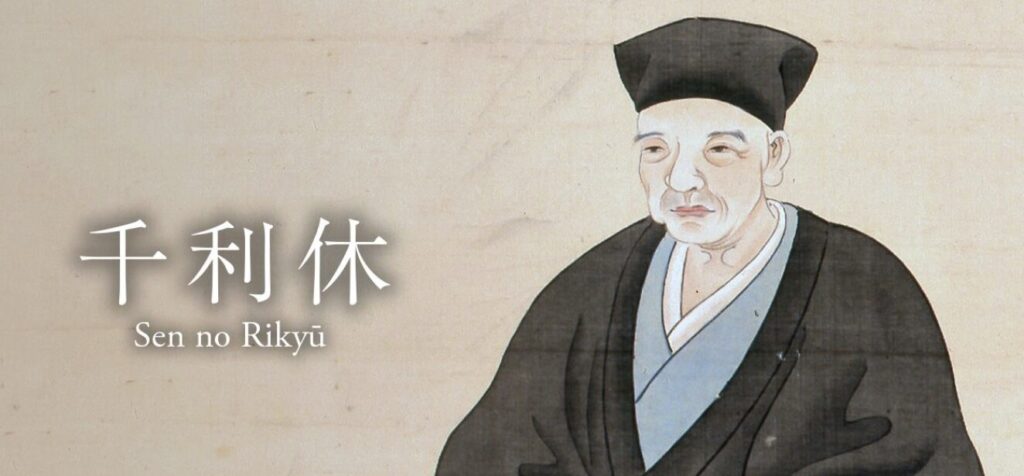
Sen no Rikyū and Modern Tea Ceremony
No figure is more important to the history of the Japanese tea ceremony than Sen no Rikyu (千 利休).
Living during the 16th century, Rikyu served powerful leaders such as Oda Nobunaga (織田 信長) and Toyotomi Hideyoshi (豊臣 秀吉). He transformed tea practice into a deeply disciplined cultural art. Rikyu emphasized minimalism, the use of natural materials, spiritual awareness and an intimate tea space while developing his practice.
He also established the four guiding principles previously mentioned: Wa (和 Harmony), Kei (敬 Respect), Sei (清 Purity), and Jaku (寂 Tranquility). These values continue to define tea ceremony practice today.
Tea Ceremony During the Edo Period
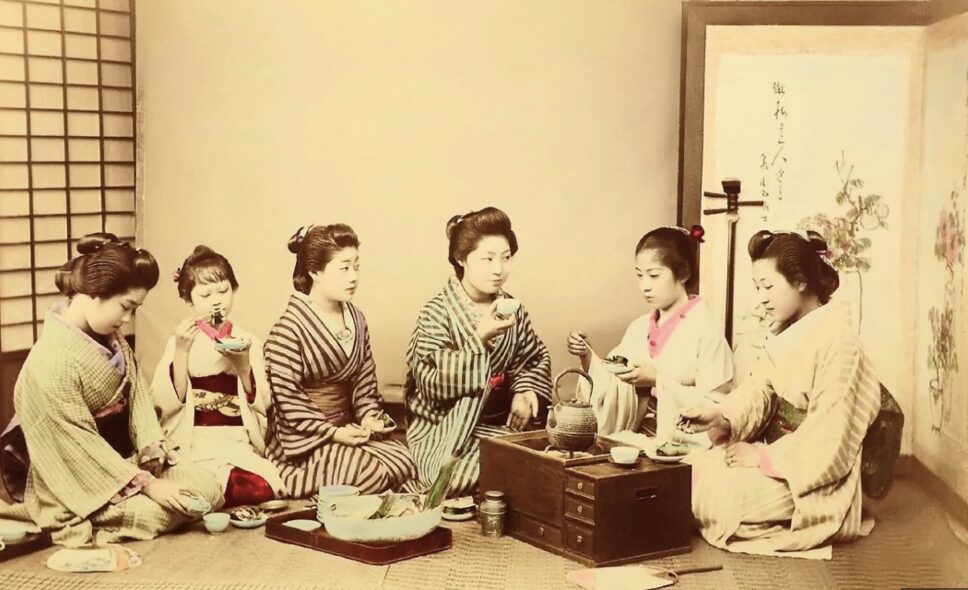
During the Edo period, the tea ceremony spread throughout Japanese society. Samurai, merchants, and educated townspeople all studied tea culture.
Several major tea schools emerged from the traditions established by Sen no Rikyu, including Urasenke (裏千家) and Omotesenke (表千家).
Each school developed distinct approaches to tea preparation, etiquette, and aesthetics.
Urasenke is the largest and most internationally recognized tea school today. It has actively promoted Japanese tea culture worldwide and operates branches across Europe, North America, and Asia.
For many people outside Japan, Urasenke is their first introduction to tea ceremony. One of its most recognizable features is its preparation of matcha with a thicker layer of foam.
Omotesenke is considered by many practitioners to preserve a more restrained and austere interpretation of Sen no Rikyu’s teachings. Compared to Urasenke, Omotesenke tends to emphasize understated elegance and simplicity.
The Japanese Tea Ceremony in Modern Times
Following the Meiji Restoration, many traditional practices faced decline. However, tea ceremony survived and eventually regained popularity as an important symbol of Japanese cultural identity.
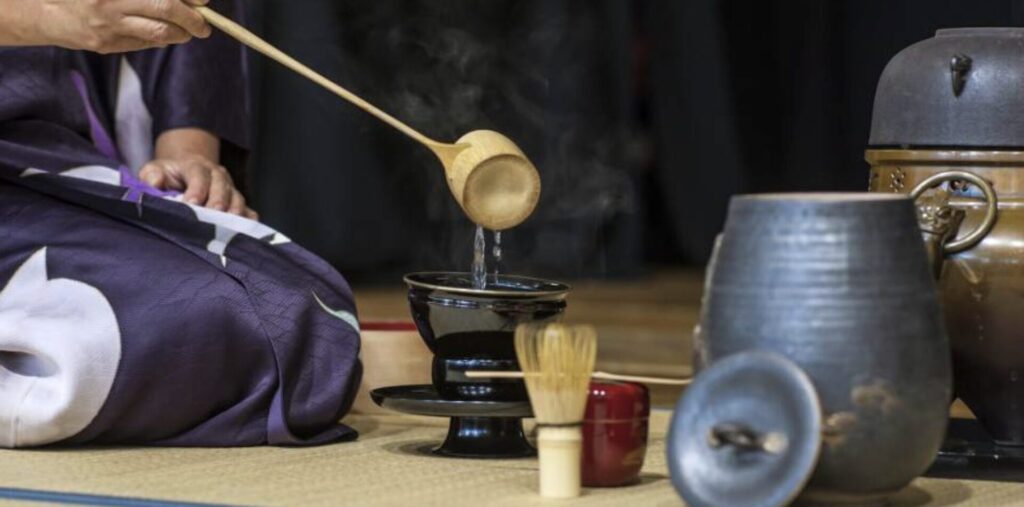
Today, traditional tea ceremonies are still practiced in Japan as a means of mindfulness.
Tea schools also welcome guests from around the world, so visitors can experience a simplified tea ceremony in temples, gardens, and cultural centers. For example, at Tokyo Matcha Academy – where you can learn not only how to properly whisk matcha, but also the history of tea culture and agriculture in Japan! Please use the link here.
Conclusion
The history of the Japanese tea ceremony is a story of cultural transformation. What began as a tea-drinking custom imported from China has evolved into one of Japan’s most refined and meaningful traditions. Through the influence of Zen Buddhism and tea masters such as Sen no Rikyu, tea ceremony has become a spiritual and artistic discipline centered on harmony, simplicity, and mindfulness.
Today, the Japanese tea ceremony remains an enduring symbol of Japanese culture and continues to inspire people around the world through its beauty, elegance, and philosophy.
You might also like
- Mysticism to Mindfulness: Introduction to Beverage-Based Ceremonies Around the World
- How Tea Ceremony Teaches Mindfulness Through The Senses
- A Beginner’s Guide to the History of Japanese Tea Ceremony
- Zengo in Japanese Tea Ceremony: 5 Important Zen Words Behind the Spirit of Matcha
- 5 Most Important Tea Ceremony Manners Every Beginner Should Know
- First Tea Ceremony in Japan? Try Bringing These Items!