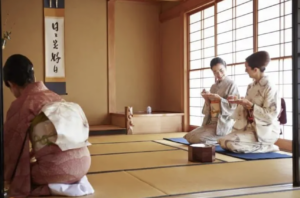
How Tea Ceremony Teaches Mindfulness Through The Senses
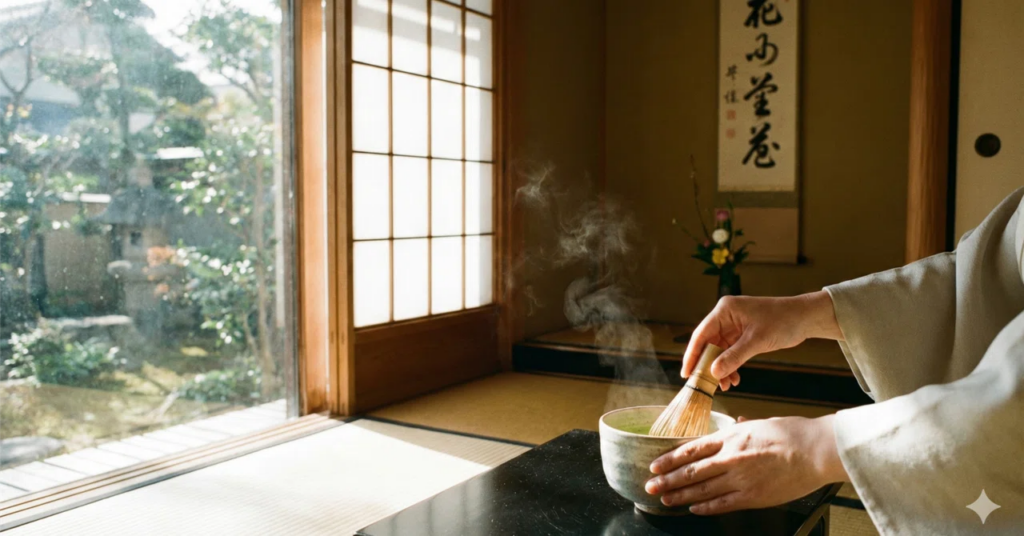
Introduction
Japanese tea ceremony, or 茶の湯 / cha no yu, is often described as graceful, quiet, and beautiful. But its depth does not come only from the appearance of the movements or the taste of matcha.
Tea ceremony teaches mindfulness through the whole body.
It invites the host and guests to notice sound, fragrance, taste, touch, movement, season, and space. A bowl of matcha is not simply prepared and consumed. It is received through a series of carefully arranged sensory experiences.
The sound of the bamboo whisk.
The fragrance of incense.
The texture of the tea bowl.
The taste of matcha as it moves through the body.
The visual appreciation of utensils after drinking.
Each element asks us to slow down and pay attention.
In this way, tea ceremony becomes a practice of mindfulness not through explanation, but through experience.
1. 袱紗さばき / Fukusa Sabaki: Mindfulness Through Movement
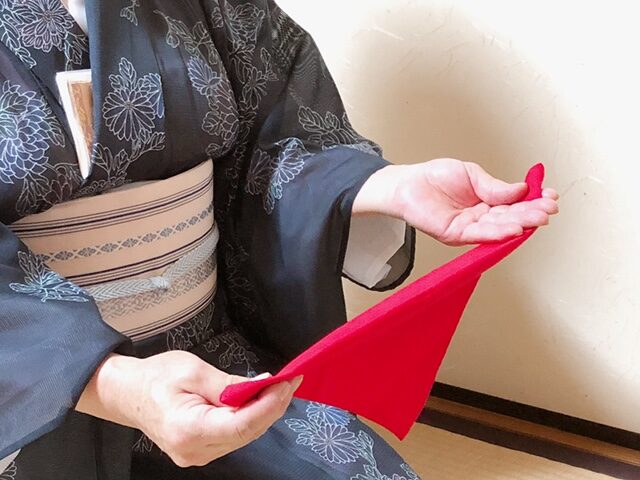
One of the clearest examples of mindfulness in tea ceremony is 袱紗さばき / fukusa sabaki.
The 袱紗 / fukusa is a silk cloth used by the host to purify utensils such as the tea scoop and tea container. The folding, opening, and handling of the fukusa follows a precise rhythm.
At first glance, it may seem like a preparation step. But in tea ceremony, preparation is never separate from the heart of the practice.
The host must be aware of the cloth, the hands, the timing, and the flow of the next movement. The action cannot be done well while distracted. It requires attention from the whole body.
This is mindfulness through movement.
The fukusa is not handled quickly or casually. Each fold and gesture creates a moment of focus. The host’s attention becomes visible through the body, and the guest can feel that care through the atmosphere of the room.
Fukusa sabaki shows that mindfulness in tea ceremony is not only a state of mind. It is something practiced through repeated, careful movement.
2. 茶筅の音 / Chasen no Oto: Mindfulness Through Sound
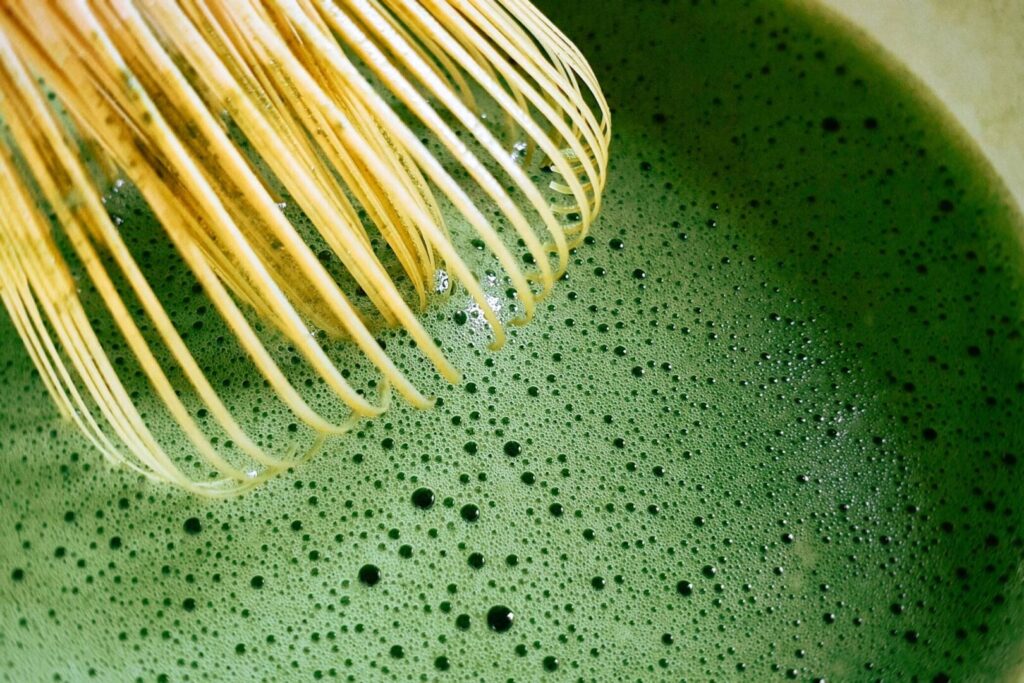
Tea ceremony also teaches mindfulness through sound.
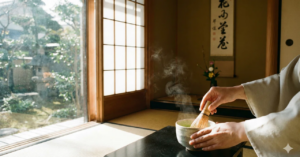
One of the most memorable sounds in the tea room is 茶筅の音 / chasen no oto — the sound of the bamboo whisk moving through matcha with a soft swish.
The 茶筅 / chasen is used to whisk matcha with hot water. In daily life, a small sound like this might disappear into the background. But in the quiet atmosphere of the tea room, the sound becomes vivid.
The whisk moves through the tea.
The bowl rests on the tatami.
The host’s movements follow a quiet rhythm.
These sounds invite the guest to listen.
This is mindfulness through sound.
The sound of the chasen is not dramatic, but it has presence. It draws attention to the exact moment when matcha is being prepared. For the host, it is part of the rhythm of making tea. For the guest, it becomes a quiet invitation to slow down and notice what is happening.
Tea ceremony teaches us that even a small sound can return the mind to the present.
3. 茶巾で茶碗を清める / Purifying the Tea Bowl with the Chakin: Mindfulness Through Care
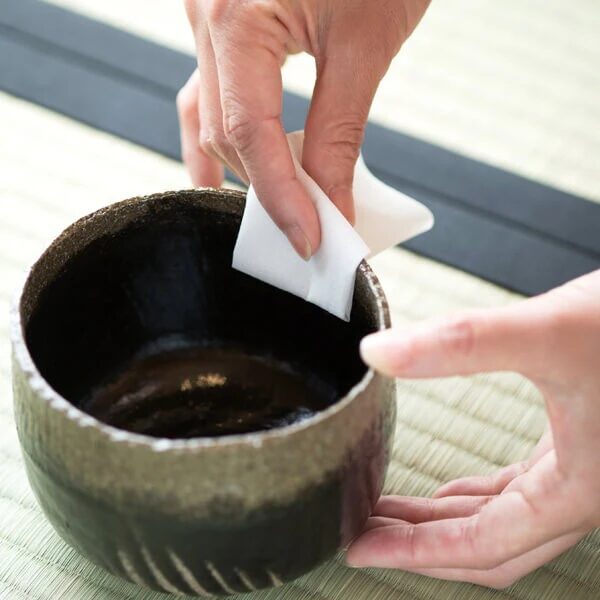
Another meaningful action is using the 茶巾 / chakin, a white linen cloth, to purify the tea bowl.
The host carefully handles the chakin before wiping the inside of the bowl. This action is practical, but it also carries a deeper sense of preparation.
The bowl is not treated as an ordinary container. It is prepared for the guest with care.
The movement is quiet and precise. The host’s attention is on the bowl, the cloth, the hands, and the space in front of them. Nothing is rushed. Nothing is careless.
This is mindfulness through care.
In daily life, cleaning is often something we try to finish quickly. In tea ceremony, purifying the bowl becomes part of the beauty of the moment. It shows that preparation itself can express sincerity.
The chakin reminds us that mindfulness can appear in the way we care for ordinary objects.
4. 柄杓を扱う / Handling the Hishaku: Mindfulness Through Control and Grace
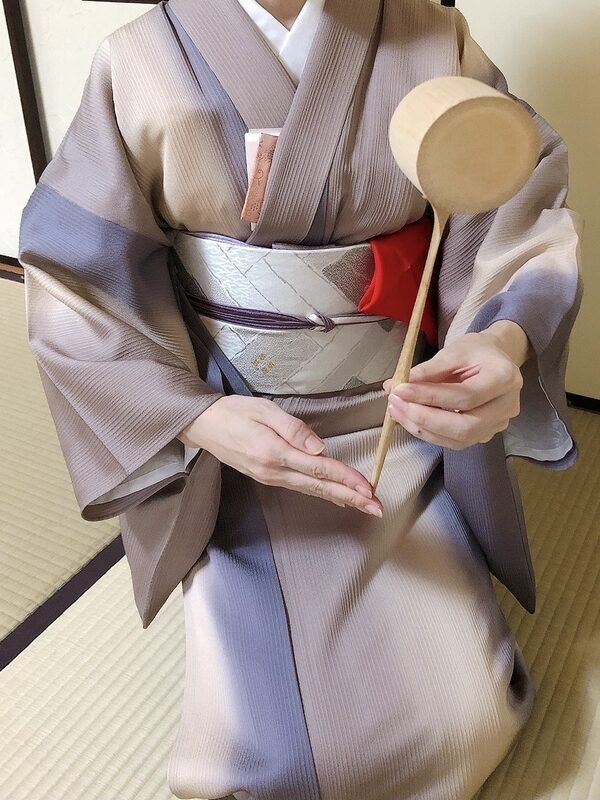
The 柄杓 / hishaku is the bamboo ladle used in tea ceremony to scoop hot or cold water.
Although it may seem like a simple tool, the way the hishaku is held, lifted, rested, and returned is done with great care. Each movement has direction, rhythm, and purpose.
One important example is 鏡柄杓 / kagami-bishaku, one of the basic movements used when handling the hishaku during 点前 / temae, the tea-making procedure.
In kagami-bishaku, the host holds the hishaku in the left hand and positions the round part of the ladle, called the 合 / uke, beautifully in front of the body, almost as if looking into a mirror. This movement is often used when preparing to open or close the lid of the kettle.
At first glance, it may seem like a small technical gesture. But it carries a quiet sense of preparation.
By holding the hishaku upright and facing oneself, the host pauses for a moment and gathers their attention before making tea. It is a way to settle the mind and focus on the next action.
This is mindfulness through control and grace.
The host is not only thinking about the final bowl of matcha. They are attentive to each step: the angle of the ladle, the placement of the hands, the position of the body, and the flow of the ceremony.
Kagami-bishaku reminds us that mindfulness in tea ceremony is not only found in stillness. It can also be found in a carefully held object, a precise transition, and the quiet moment before the next movement begins.
5. 香合と香木 / Kōgō and Kōboku: Mindfulness Through Fragrance
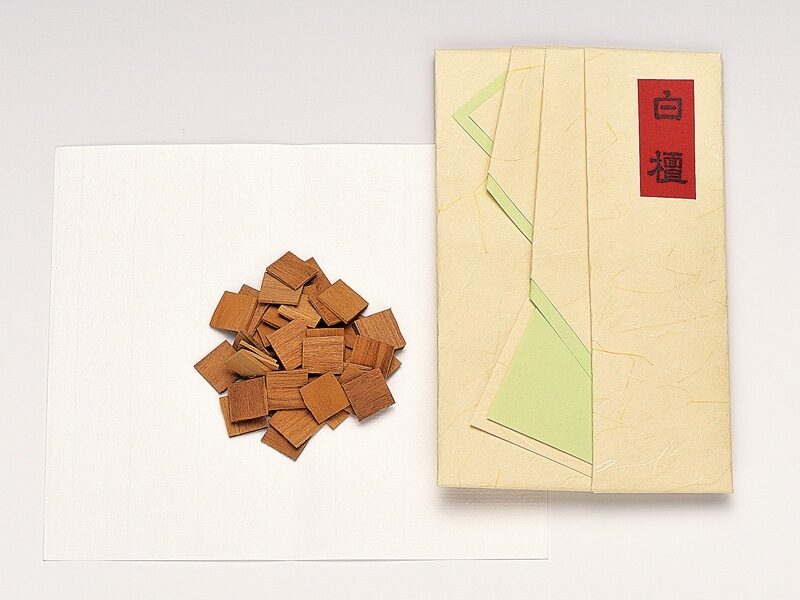
Mindfulness in tea ceremony is not only visual or physical. It can also be experienced through fragrance.
One example is the 香合 / kōgō, a small lidded container used to hold incense. Inside the kōgō, the host may place 香木 / kōboku, fragrant wood used as incense.
The kōgō may be small, but it has a quiet presence in the tea room. The fragrance of kōboku helps create the atmosphere of the gathering. It is not meant to be strong or overwhelming. Instead, the scent is subtle, soft, and often noticed gradually.
This is mindfulness through smell.
A gentle fragrance changes the way we experience the space. It invites the guest to breathe, settle, and become aware of the room they have entered.
The choice of kōgō and kōboku can also reflect the season, the occasion, or the feeling the host wants to create. Like the flowers, sweets, scroll, and utensils, fragrance becomes part of the host’s hospitality.
Even before drinking matcha, the experience has already begun.
Through the quiet scent of kōboku and the careful presence of the kōgō, tea ceremony reminds us that mindfulness is not only something we see or think about. It is something we breathe in.
6. 抹茶を味わう / Tasting Matcha: Mindfulness Through Taste
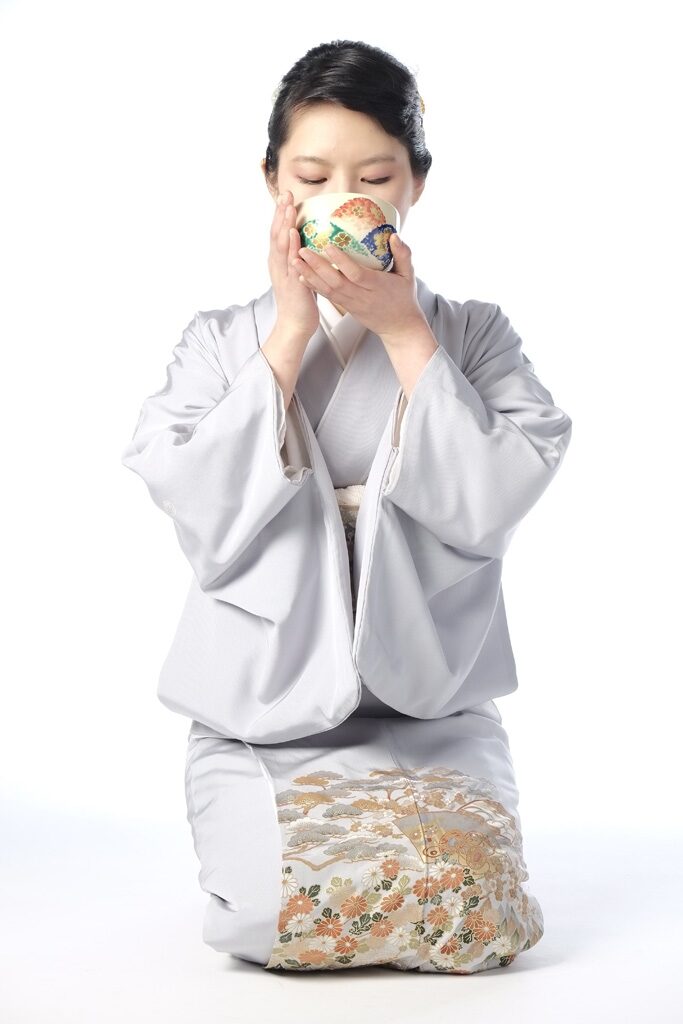
Taste is one of the most direct ways tea ceremony teaches mindfulness.
When the guest drinks matcha, the experience is not only about flavor on the tongue. The guest may notice the warmth of the tea, its texture, its bitterness, its umami, and the way the taste changes after eating wagashi.
Some guests may naturally close their eyes for a moment while tasting the tea. This is not because tea ceremony requires a dramatic reaction, but because closing the eyes can help deepen attention.
The taste of matcha is not only examined by the tongue.
It can be felt as it moves through the mouth, throat, and body. The warmth travels downward. The bitterness softens. The aftertaste remains.
This is mindfulness through taste.
Instead of drinking automatically, the guest receives the tea with the whole body. One sip becomes an opportunity to notice temperature, texture, aroma, and aftertaste.
In tea ceremony, tasting matcha is not rushed. It is a moment of direct experience.
7. 拝見 / Haiken: Mindfulness Through Sight
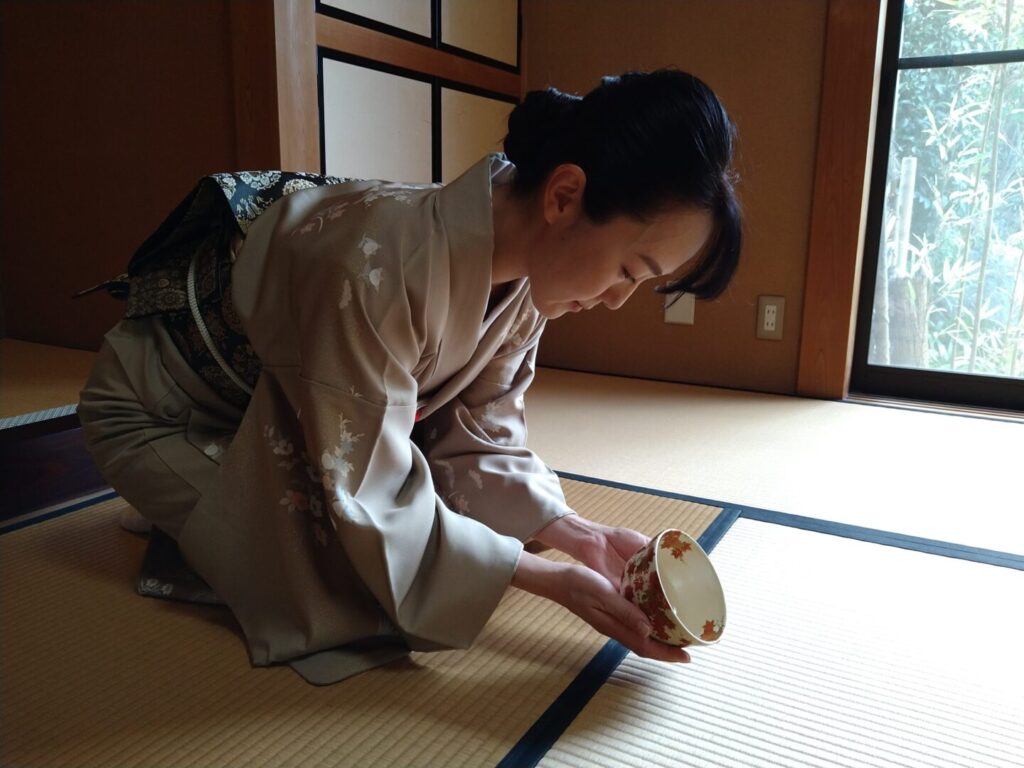
After drinking matcha, guests may have the opportunity to appreciate the tea bowl or other utensils. This act is called 拝見 / haiken.
Haiken means to view or appreciate respectfully.
This is not a quick glance. The guest takes time to look closely at the bowl’s shape, color, texture, glaze, weight, and small details. A handmade tea bowl may be uneven. The surface may show marks from the maker’s hands. The glaze may shift in color depending on the angle.
These details are part of the bowl’s character.
This is mindfulness through sight.
Haiken teaches the guest to look slowly. The tea bowl is not just a vessel that held matcha. It is an object chosen by the host for this gathering, this season, and these guests.
Through haiken, the guest can sense the host’s intention more deeply.
The act of looking becomes a form of respect.
8. お茶をいただく前の一呼吸 / The Pause Before Drinking: Mindfulness Through Receiving
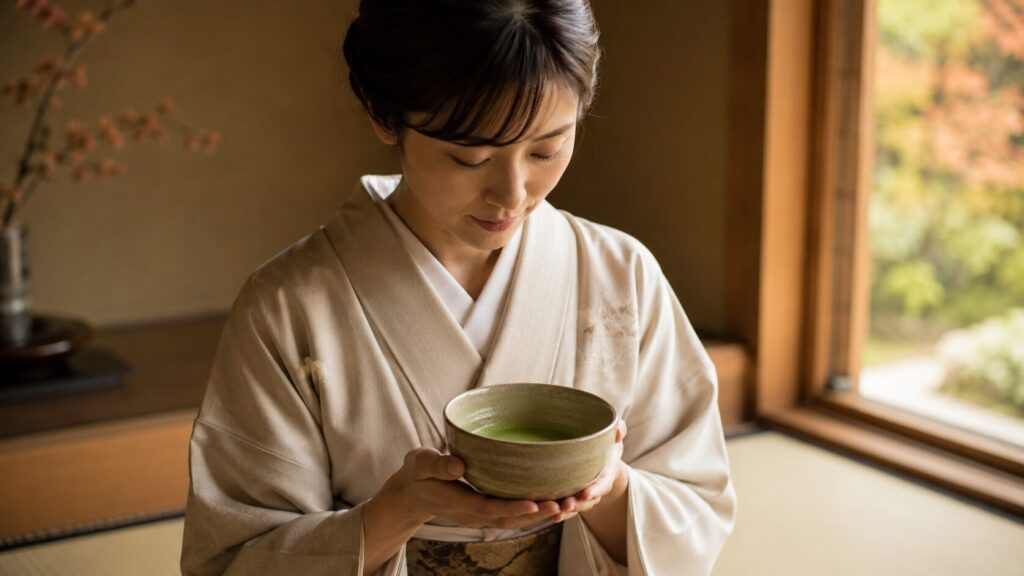
One of the quietest but most powerful moments in tea ceremony is the pause before drinking.
After the guest receives the tea bowl, there is a brief moment before the first sip. The guest holds the bowl, notices its warmth, sees the color of the matcha, and becomes aware that this bowl was prepared especially for them.
This pause may last only a few seconds, but it changes the experience.
Instead of moving directly from receiving to drinking, the guest has time to truly receive the moment.
They feel the weight of the bowl.
They notice the surface of the tea.
They sense the care of the host.
They take one breath before drinking.
This is mindfulness through receiving.
The pause before drinking reminds us that there can be meaning in the space between actions. We do not have to rush from being given something to consuming it.
In tea ceremony, one sip of matcha becomes more meaningful because of the attention that comes before it.
9. 一期一会 / Ichigo Ichie: Mindfulness Through the Unrepeatable Moment
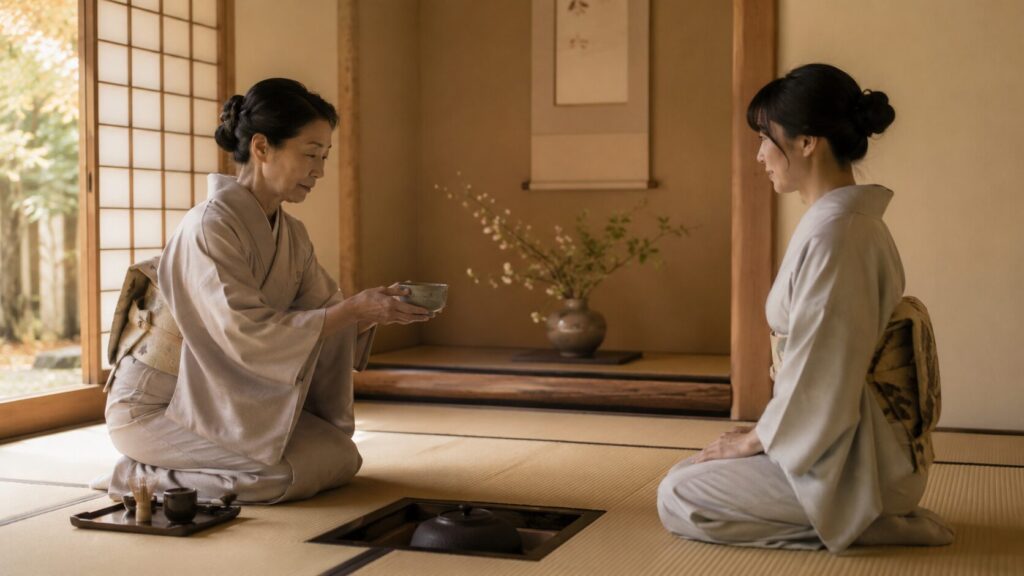
One of the most famous phrases connected to Japanese tea ceremony is 一期一会 / ichigo ichie.
It is often translated as:
“One time, one meeting.”
The phrase expresses the idea that every encounter is unique and will never happen in the exact same way again.
Even if the same people meet again, the moment itself will be different. The season will change. The weather will change. The guests’ feelings will change. The host may choose different utensils, sweets, flowers, incense, or a different tea bowl.
In tea ceremony, ichigo ichie encourages both host and guest to treat the gathering as precious.
This idea is deeply connected to mindfulness.
When we remember that a moment will not come again, we naturally pay closer attention. We listen more carefully. We look more closely. We receive the experience with more gratitude.
A bowl of matcha may seem simple, but in tea ceremony it becomes a once-in-a-lifetime moment shared between people, nature, objects, and time.
That is the quiet power of ichigo ichie.
For more about ichigo ichie and other Zen phrases, please see our article on Zen Words Often Used in Tea Ceremony.
Conclusion: Tea Ceremony as Mindfulness Through the Senses
Tea ceremony teaches mindfulness not by explaining it, but by making it something we can experience directly.
Through fukusa sabaki, mindfulness appears as careful movement.
Through chasen no oto, it appears as sound.
Through the chakin, it appears as care and preparation.
Through the hishaku, it appears as control and grace.
Through the kōgō, it appears as fragrance.
Through tasting matcha, it appears in the mouth, throat, and body.
Through haiken, it appears as careful seeing.
Through the pause before drinking, it appears as receiving.
Through ichigo ichie, it appears as appreciation for an unrepeatable moment.
This is why tea ceremony remains meaningful today.
It is not only a traditional cultural experience. It is a practice that teaches attention through the senses, the body, and the relationship between host and guest.
One bowl of matcha.
One quiet room.
One shared moment.
Everything asks us to be here.
Experience Mindfulness Through Matcha
The best way to understand the mindfulness of tea ceremony is to experience it directly.
At Tokyo Matcha Academy, guests can learn about Japanese tea culture in a beginner-friendly way while enjoying the calm, beauty, and meaning behind a bowl of matcha.
It’s designed to be a relaxed, hands-on experience where travelers can slow down and enjoy a quieter side of Japan while sipping freshly prepared matcha.
Wearing kimono also makes it a wonderful opportunity for photos and a chance to experience traditional Japanese aesthetics in a meaningful way.
If you’re looking for a cultural activity beyond sightseeing, this can be a special way to connect with Japanese tea traditions and hospitality.
You do not need previous knowledge of tea ceremony. You only need curiosity and a willingness to slow down for a moment.
Through tea ceremony, matcha becomes more than a drink.
It becomes a way to listen, breathe, notice, receive, and appreciate the present moment.
Interested in joining one of our workshops? Make a booking on our site at
https://matchajaponica.com/booking/
We look forward to seeing you during your trip to Tokyo!

Check Out Our Other Articles…
- Mysticism to Mindfulness: Introduction to Beverage-Based Ceremonies Around the World
- How Tea Ceremony Teaches Mindfulness Through The Senses
- A Beginner’s Guide to the History of Japanese Tea Ceremony
- Zengo in Japanese Tea Ceremony: 5 Important Zen Words Behind the Spirit of Matcha
- 5 Most Important Tea Ceremony Manners Every Beginner Should Know
- First Tea Ceremony in Japan? Try Bringing These Items!